

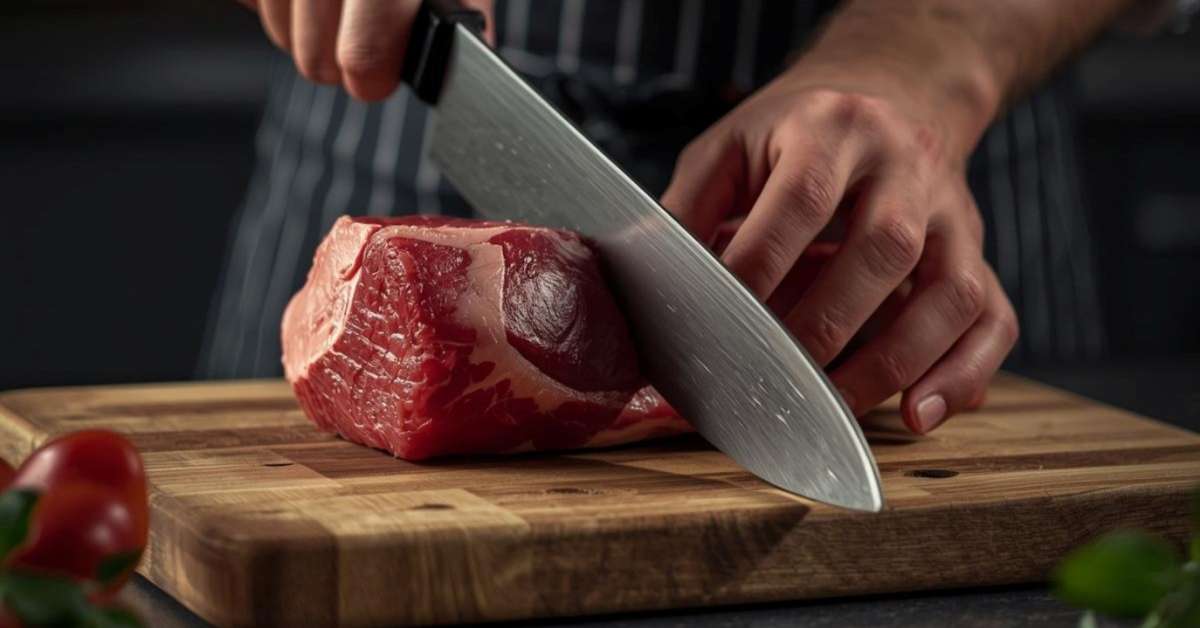
At first glance, a butcher’s work can look deceptively simple: a sharp knife, a carcass, and a series of familiar cuts. In reality, traditional butchery is a highly skilled craft, built on knowledge that blends anatomy, physics, and experience passed down over generations.
Every cut begins with an intimate understanding of animal structure. A skilled butcher knows exactly where muscles begin and end, how they work, and how connective tissue holds everything together. Cutting with muscle seams rather than against them preserves tenderness, reduces waste, and produces portions that cook more evenly. This knowledge cannot be guessed—it’s learned through repetition and careful observation.
Knife control is another hidden skill. Traditional butchers develop exceptional hand strength, precision, and rhythm. Each movement is deliberate: too much pressure damages fibres, too little leaves ragged edges. Clean cuts matter not only for appearance, but for shelf life and performance in the kitchen. A well-cut piece of meat retains moisture better and behaves more predictably when cooked.
There’s also an art to reading the meat itself. Fat cover, muscle colour, grain direction, and density all influence how a cut should be portioned. Two animals of the same species can require different approaches, and experienced butchers adjust instinctively. This adaptability is something machines struggle to replicate.
Traditional cuts also reflect cooking traditions. Many classic cuts were designed around slow cooking, roasting, or open-fire methods, shaped to maximise flavour rather than convenience. Knowing which cuts suit which cooking techniques is part of the butcher’s expertise—and why good butchers are often excellent cooks.
In an age of automation and pre-packaged meat, traditional butchery skills are increasingly rare. Yet behind every well-prepared cut lies quiet mastery: respect for the animal, efficiency of movement, and an understanding that great meat starts long before it reaches the plate. Traditional butchery isn’t just cutting—it’s craftsmanship
From farm to processing floor, quality starts early.
Discover how tradition, technique, and environment shape the meat we consume worldwide.